All posts by 43rdcaucus

GeoNetworks for residential decarbonization

About 40% of our total emissions in Seattle are from buildings, and almost half of those of from small multi-family buildings and single family houses. Finding a fair, cost-effective way to electrify them is a big puzzle. GeoNetworks, or networked ground source heat pumps, could be a part of the answer. Laura Feinstein, from Sightline Institute, presented on this at our July meeting. If you would like to watch the presentation, please email 43rdenvcaucus@gmail.com for a link. The slides are here.

Sightline has a number of great articles on their website about this.

Here’s a good overview on how they could be used by gas utilities, which a good video and diagrams showing how they work.

Shrinking the cost of the gas system by decommissioning gas pipelines.

New business models for gas utilities (and why we might want a gas utility to persist).
What to do about Plastics Pollution?

Staff|TPIN

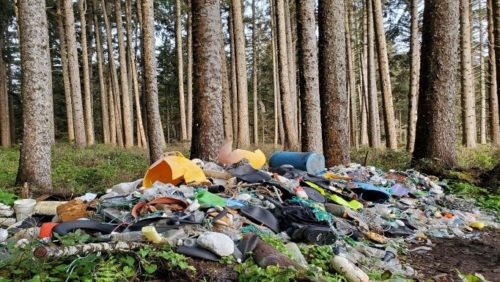
Pam Clough from Environment Washington gave a great presentation to the Caucus on the plastics packaging problem, and what we in Washington can do about it. Many manufacturers are now shipping products in packaging made from multiple types of materials (e.g., an aluminum can with a plastic lining) that make them unrecycleable. So Environment Washington is working together Zero Waste Washington and other groups in the Plastic Free WA coalition to pass new Extended Producer Responsibility (EPR) legislation to require manufacturers to pay for the costs of packaging disposal. Slides from her talk are here.

What can we do? As it turns out, quite a lot!

King County Climate Action Plan

Ever wondered what actions King County is planning to take on climate? At our October monthly meeting, Robin Briggs gave a talk on the new King County Climate Action Plan with an emphasis on the Plan’s greenhouse gas reduction policies. The talk covers the County’s reduction goals, emissions inventory results, and proposed policies for reducing greenhouse gases.

Metro Sustainability & Climate Priorities

Metro is updating its key plans: operational, strategic, and long-term, to be more in line with the King County Strategic Action Plan (SCAP). A key part of the SCAP is getting more people to ride transit, and the new plans call for a 70% increase in transit ridership by 2040. Carrie Lee and Stephanie Pure came to the latest Caucus meeting to explain the changes, and how Metro can help the County meet its greenhouse gas reduction goals and improve climate equity. The presentation was recorded, click here to view it.

What is a Road Usage Charge?

Can we move beyond the gas tax? What is a fair and equitable way to pay for our state road system?

At our last meeting we were joined by a guest speaker, Reema Griffith, Executive Director, Washington State Transportation Commission. She gave a very interesting presentation on research the State Transportation Commission is doing on replacing the current gas tax with a per mile fee. As cars are getting more fuel efficient, and as electric vehicles become more prevalent, the state needs a way to fund roads that is not based solely on the gas tax. Presentation

Making Climate Policy Work

Making Climate Policy Work is a new book by Danny Cullenward and David G. Victor. This book is an excellent primer on large scale climate change policy, including the Cap and Trade markets like the one established by the recently enacted Washington Climate Commitment Act.

The Caucus is starting a group to read and discuss the book, with a particular focus on understanding the implications of the new law. If you are interested in joining the group, please email 43rdenvcaucus@gmail.com .

Doughnut Economics

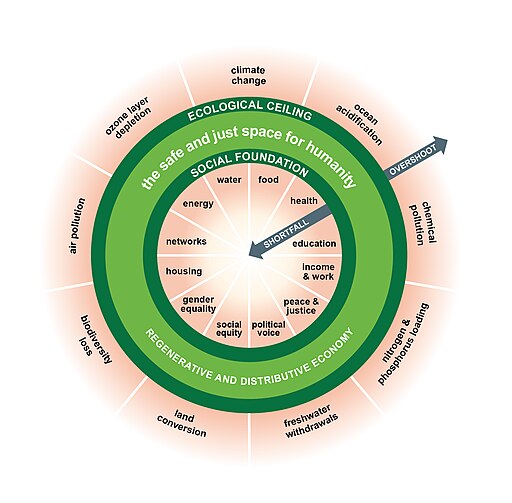
At our June meeting, Jeff Berner gave a talk on Doughnut Economics by Kate Raworth, a new theory of economics that takes into account the balance between having enough for humans to live well vs staying within our ecological limits. This is in contrast to more traditional growth-based economics that measure success by GDP. This new Doughnut Economics model is now being used by Amsterdam and Portland, OR. as part of their city planning. This is being done in coordination with C40, a global group of cities, including Seattle, that are working together on reducing climate change. Seattle could adopt this framework as well, and we discussed communicating with the city on this issue.

<a title="DoughnutEconomics, CC BY-SA 4.0 ;, via Wikimedia Commons” href=”https://commons.wikimedia.org/wiki/File:Doughnut_(economic_model).jpg”>Doughnut (economic model)

Here are the slides from Jeff’s talk. You can also checkout the site Doughnut Economics Action Lab for more info, or read Kate Raworth’s book Doughnut Economics.

Seattle Car Tabs Spending Plan

The Caucus met on May 3 and heard presentations from Gordon Padelford of Seattle Neighborhood Greenways and Ben Broesamle of Seattle Subway on the spending plan for Seattle’s car tab revenue. Gordon’s talk compared the Seattle Department of Transportation’s plan to the recent plan advanced by Alex Pedersen, chair of the City Council’s Transportation Committee. Slides are available here. Ben’s talk focused on the need for an update to the Transit Master Plan before the Sound Transit design for the new downtown tunnel for getting the Link to the Ballard begins. This was part of the original SDOT spending plan, but was left out of Pedersen’s proposal.

Clean and Just Transportation

Hester Serebrin from Transportation Choices Coalition (TCC) provided a briefing on the State Transportation budget packages.  TCC  has developed a set of climate and equity  principles for transportation projects and is evaluating different transportation projects using this lens.  TCC  seeks support for their Clean and Just Transportation campaign. The 43rd District Caucus has signed on to this campaign.

See here for the slides.